
Methods and Madness of Demand Forecasting in Retail

Demand forecasting is a way to predict future sales data by using historical sales figures. This will help you make the right business decisions and meet customer demands efficiently. Demand forecasting also helps the business analyse the inventory level, stocks in SKU, total sales, and revenue for a future period. Demand forecasting helps the business make better-informed supply decisions that estimate the total sales and revenue for a future period of time.
Forecasting is a technique that uses historical data as inputs to make informed estimates that are predictive in determining the direction of future trends. Businesses utilize forecasting to determine how to allocate their budgets or plan for anticipated expenses for an upcoming period of time.
Essentially, forecasting lets a business look at past trends plus their current position and predict a future. You can use business forecast tools to help predict sales, budgets, and more. Having an accurate picture of your business's potential using data and market trends can help you set and meet objectives
Let's first understand the basic types of demand:
7 types of demand:
Joint demand. Joint demand is the demand for complementary products and services. ...
Composite demand. Composite demand happens when there are multiple uses for a single product. ...
Short-run and long-run demand. ...
Price demand. ...
Income demand. ...
Competitive demand. ...
Direct and derived demand. ...
Expectations.

These seven steps can generate forecasts.
Determine what the forecast is for.
Select the items for the forecast.
Select the time horizon. Interested in learning more? ...
Select the forecast model type.
Gather data to be input into the model.
Make the forecast.
Verify and implement the results.
What are the four 4 main components in a forecast?
To set up a perfect demand forecasting process, you need to get four things right: granularity, temporality, metrics, and process
Businesses utilise the internal demand forecasting method to forecast future consumer demand for their goods and services. This forecasting process is based on a variety of factors such as past sales, industry trends, economic conditions, and customer feedback

Demand forecasting helps reduce risks and make efficient financial decisions that impact profit margins, cash flow, allocation of resources, opportunities for expansion, inventory accounting, operating costs, staffing, and overall spend. Demand forecasting provides essential information about future customer demand; it assists companies in making more intelligent decisions about production planning, inventory management, and supply chain operations. It also helps with profit margins, cash flow, capital expenditures, future capacity planning, and more
Demand prediction plays a critical role in the grocery retail industry as it helps retailers to manage their inventory effectively and ensure that they have the right products in stock at the right time. With the help of advanced analytics and machine learning algorithms, retailers can forecast demand more accurately and adjust their inventory levels accordingly. This can have a significant impact on reducing aged stocks, as retailers can avoid overstocking products that are not in high demand, and instead focus on stocking the products that customers are more likely to buy.
What are the key components of demand forecasting?
Usually demand is thought of as having six components, average, trend, seasonal elements, cyclical elements, random variation and autocorrelation. These elements of demand enable us to understand the pattern of demand for a product that might be applied to the prediction of future demand
By using data analytics and predictive algorithms, retailers can identify patterns in consumer behavior, such as seasonal trends, sales patterns, and customer preferences. This information can be used to optimize inventory levels, reduce stockouts, and prevent overstocking. By accurately forecasting demand, retailers can also reduce the amount of unsold stock and minimize waste, which can lead to cost savings.
What are the risks of demand forecasting?
Demand risk refers to the idea that these forecasts may not accurately predict the amount of product that customers are willing and able to buy. The risk for a business is that it may produce too much or too little product to meet demand, resulting in lost profits and wasted sales opportunities

In addition to reducing aged stocks, optimizing order and inventory levels can also lead to better margins for grocery retailers. By having the right products in stock at the right time, retailers can improve their sales and reduce their operational costs. For example, retailers can avoid the costs associated with storing and managing excess inventory, and they can also reduce the costs of stockouts, such as lost sales and dissatisfied customers.
Moreover, inventory optimization can also lead to better pricing strategies, as retailers can identify which products are most profitable and adjust their pricing accordingly. By setting the right prices for their products, retailers can maximize their profits and improve their overall margins.
Factors Influencing Demand Forecasting
There are a number of factors that can significantly impact demand which need to be taken into account prior to forecasting. Here are the five most common influencers impacting forecasting and demand management.
Seasonality
As seasons change, so can demand. A highly seasonal brand, or a cyclical business, may have a peak season when sales are booming followed by off-seasons when sales are steady or even very slow. Some demand forecasting examples based on seasonality include products used during specific seasons (boating gear during the summer), holidays (costumes and candy on Halloween) or events (wedding season, for example).
Competition
When competition enters or exits the scene, demand can drop or skyrocket. For example, if a new player enters the market and starts vying for its share of the pie, established businesses may suffer; on the other hand, if an existing competitor folds, or begins losing ground because of bad product, service, or PR, other businesses will be in greater demand as consumers make a switch.
Geography
Where your customers reside and where you manufacture, store, and fulfill orders from can have a huge impact on inventory forecasting (not to mention shipping costs). So, it pays to be strategic when choosing geographic locations of your supply chain. For example, if you sell swimwear, you’ll probably want to store the majority of your product in a state like Florida where they are ordered most; that way, you don’t have to ship to faraway locations.
Economy
Economic conditions can have a big impact on forecasting product demand. For example, if an economy enters into depression or recession, and fewer people are working, the demand for high-priced, luxury products is likely to fall, while demand for low-priced, generic products is likely to increase.
Types of Goods
Different products and services have very different demand forecasting. For example, forecasting demand for perishable goods with a short shelf-life must be very precise or a lot of inventory could be lost. On the other hand, demand can more or less be predicted for a subscription box service that’s shipped to the same customers at the same time each month (assuming customer retention and attrition are relatively steady).
Types of Demand Forecasting
Demand forecasting can be conducted in a number of ways; to achieve the most accurate, well-rounded picture of future sales, you might even consider conducting more than one of these six types of demand forecasting.
1. Passive Demand Forecasting
Passive demand forecasting doesn’t require statistical methods or analysis of economic trends; it simply involves using past sales data to predict future sales data. So, while this makes passive data forecasting fairly easy, it’s really only useful for businesses that have a lot of historical data to pull from.
Because the passive model assumes this year’s sales data will be similar to last year’s sales data, it should only be used by companies that aim for steady sales rather than rapid sales growth.
2. Active Demand Forecasting
Active demand forecasting is typically used by startup businesses and companies that are growing rapidly. The active approach takes into account aggressive growth plans such as marketing or product development and also the general competitive environment of the industry, including the economic outlook, market growth projections, and more.
3. Short-Term Demand Forecasting
Short-term demand forecasting looks at a small window of time in order to inform the day-to-day (e.g., it may be used to look at inventory planning for a Black Friday promotion). It’s also useful for managing a just-in-time (JIT) supply chain or a product lineup that changes frequently. However, most businesses will only use it in conjunction with longer-term projections.
4. Long-Term Demand Forecasting
Long-term demand forecasting is conducted for a period greater than a year, which helps to identify and plan for seasonality, annual patterns, and production capacity. A long-term projection is like a blueprint; by forecasting farther out into the future, businesses can focus on shaping the growth trajectory of their brands, creating their fulfillment marketing plan, planning capital investments and expansion strategies, and more to prepare for future demand.
5. Macro & Micro Demand Forecasting
Demand forecasting at a macro level looks at external forces disrupting commerce such as economic conditions, competition, and consumer trends. Understanding these forces help businesses identify product or service expansion opportunities, predict upcoming financial challenges or raw material shortages, and more. Even if your company is more interested in stability than growth, a look at external market forces can still keep you in the loop when it comes to issues that could impact your supply chain.
Demand at a micro level is still external, however, it drills down to the particulars of a specific industry or customer segment (for example, projecting demand for an organic peanut butter among millennial parents in Austin, Texas).
6. Internal Demand Forecasting
A limiting factor for business growth is internal capacity; say you project that customer demand will triple in the next three years; does your business have the capacity to meet that demand? With internal forecasting, the needs of all operations that may impact future sales are identified. For example, in human resources, demand forecasting could help identify how many people will need to be hired within those next three years to keep things running smoothly and fill future customer demand.

Demand Forecasting Methods
Choosing the type (or types) of demand forecasting or eCommerce demand forecasting you’ll use for your business is just part of the process. Next is determining the method you’ll use to create the forecast. Here are five popular methods of achieving a demand forecast.
1. Statistical Method
Using statistical methods is a reliable and often cost-effective method of demand forecasting. A few ways to employ the statistic method include:
Trend projection, which is probably the easiest method of demand forecasting. Simply put, you look at the past to predict the future. Of course, be sure to remove any anomalies. For example, if you had a brief sales spike the previous year because a story about your product went viral for a month, or your eCommerce site was hacked and sales temporarily dropped as customers heard the news. Both of these events are unlikely to repeat, so they should not be factored into the trend projection.
Regression Analysis, which enables companies to identify and analyze the relationships between different variables such as sales, conversions, and email signups. Taking a holistic view of how each impacts the other can help a company allocate resources to the right area in order to boost sales.
2. Market Research/Surveying
Market research is another form of demand forecasting, with customer surveys being important demand forecasting tools. Today, online surveys make it easy to target your audience and survey software makes analysis much less time-consuming than in the past.
Using surveys, forecasters can gain a lot of valuable insights that simply can’t be mined from a sales figure. They can help paint a better picture of your customer and their needs, inform marketing efforts, and identify opportunities.
Some of the most popular surveys with sales and marketing teams include:
Sample surveys, in which a select sample of potential buyers are interviewed to determine their buying habits.
Complete enumeration surveys, in which the largest possible sample of potential buyers are interviewed to gather a broader data set.
End-use surveys, in which other companies are surveyed to determine their view on end-use demand.
Surveys can be easily conducted online using platforms such as SurveyLegend, SoGoSurvey, and Qualtrics.
3. Delphi Method
Often used in conjunction with an expert opinion, the Delphi Method was developed by the RAND Corporation in the 1950s and still popular today. The Delphi method of forecasting leverages the opinion of industry experts to make a demand forecast. Here’s how it works, in a nutshell:
A panel of industry experts is compiled.
A questionnaire is sent to each expert on the panel.
Results of the questionnaire are summarized by a facilitator who returns the summary to each member of the panel.
The panel is re-questioned on their forecasts and encouraged to revise their earlier answers in light of the replies of other members of their panel.
This may continue for another round or two.
Because the Delphi method allows the experts to build on each other’s knowledge and opinions, the end result is considered a more informed consensus.
4. Barometrics
This forecasting method uses three indicators to predict trends.
Leading indicators attempt to predict future events. For example, an increase in customer complaints due to shipping delays or backorders could lead to a decrease in sales.
Lagging indicators analyze the impact of past events. For example, a spike in sales the month prior could indicate a growing trend that needs to be watched closely for inventory purposes.
Coincidental indicators measure events happening right now. For example, real-time inventory turnover demonstrates current sales activity.
Each indicator can be used to conduct better inventory planning and improve supply chain management.
5. Econometric Method
The econometric demand forecasting method accounts for relationships between economic factors. For example, when the COVID-19 pandemic became widespread in 2020, there was an increased demand for online shopping as customers locked down and avoided the in-store experience. Another economic example could be an increase in disposable income coinciding with an increase in travel, as more people book vacations with their extra money.
While it may sound simple in theory, the econometric demand forecasting methodology can be extremely challenging, as forecasters are rarely able to conduct controlled experiments in which only one variable is changed and the response of the subject to that change is measured. Instead, econometrics are determined using a complex system of related equations, in which all variables may change at the same time. There’s a reason those that employ this method aren’t just forecasters. They have their own title: Econometricians.
6. A/B Experimentation
Customer behavior can sometimes be informed through market experiments conducted under controlled conditions. This may include A/B testing of different promotions, features, website imagery or features, email subject lines, and much more. If consumers strongly favor one over the other, companies gain a better understanding of what appeals to them in order to forecast demand. For example, one experiment found that companies experience more sales when offering prices ending in odd numbers!
Benefits of Demand Forecasting
Is all this number-crunching worth it? Absolutely! Whether you’re a scrappy eCommerce startup or an established retail giant, demand forecasting offers numerous benefits.
Preparing Your Budget
It’s hard to prepare a budget without demand forecasting. How else will you be able to plan other purchases? For example, let’s say you overestimate the amount of inventory you’ll need due to poor demand forecasting. The more money you invest in inventory, the less cash you have to spend. So, when there’s an opportunity to invest in a new product line, or it’s time to develop that new ad campaign, the cash flow to do so may be tied up in inventory.
Developing a Pricing and the Demand Strategy
Understanding on demand strategy for your product or service can help you price it appropriately. While this will also require an understanding of the market and your competition, it can pay off handsomely. For example, if you’re sitting on a large inventory and know a newer model is coming out, you might slash prices to reduce inventory quickly and make room for the new models. Or, if there is a limited supply of a high-demand product, you can use the scarcity principle to increase the price as an exclusive offer.
Storing Inventory
The more inventory you carry, the more expensive it is to store. And, the longer you keep it, the more likely it is to decrease in value. Demand forecasting can help you spend less money on both inventory purchase orders and warehousing by informing you of what you’ll need and when you’ll need it. By not keeping too much inventory on hand, you also reduce the chance of it becoming dated if something “new and improved” comes along.
Reducing Backorders and hence optimising Margins and OTB
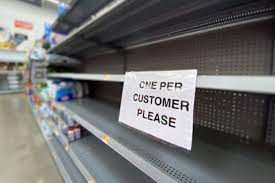
While unexpected surges in demand are always possible (for example, a previously low-demand product becomes a fad, is featured on television, or is endorsed by an influencer), proper demand forecasting can help reduce backorders. Backorders happen when you don’t have enough product to meet demand, and can lead to frustrated customers who may turn to a competitor. If they wind up liking the competitor, you could lose them for good. Demand planning helps you reduce your chances of running out of popular products (and running off your customers).
Saving on Restocking and reducing the possibility of aged inventory
Lack of demand forecasting can not only cost you customers, but it can really eat into your profits too. To fill these orders and new orders, you’ll need to restock quickly, which could mean 24/7 production or paying rush charges or expedited shipping fees to your suppliers. On top of that, to meet customer expectations (or to make good with frustrated customers), you might have to pay for expedited shipping to them as well.

How To Start Demand Forecasting
New to demand forecasting but ready to reap the rewards of doing it? Here are some steps you can take to get started!
Set Your Goals
Make planning a priority! Before you even begin collecting or analyzing data, you need to decide what you hope to accomplish. Data collection for the sake of data collection will not boost your bottom line. So, ask yourself some of the following questions and center them around a particular timeframe:
How many products in each line will we sell?
Is demand for certain lines going to fluctuate?
Are there any external factors that might impact demand?
Could changing consumer trends impact sales?
If demand drops significantly, what action will we take?
Inform Stakeholders
Once you’ve set your goals and objectives, be sure to get buy-in from everyone involved. This means roping in your sales team, marketers, research and development, and leadership. When everyone is on the same page, it's time to start forecasting!
Collect and Record Data
Choose your demand forecasting method or methods from the list we provided earlier, and then gather as much data as you can. The more data, the better the forecast will be. Don't forget that internal and external factors influence product demand so it's a good idea to gather data from inside your organization (utilizing your CRM platform or sales team) and outside your organization (conducting market research or surveys).
Analyze Data
Once you've collected some data, it's time to do some analysis, finding patterns and trends that will enable you to make predictions. For small eCommerce businesses, this could be done manually; otherwise, the most efficient way to analyze data is through an AI platform. These solutions use machine learning to provide insights from your data quickly.
Make Any Necessary Adjustments
What you do with your findings is crucial – this is the part that is going to benefit your business! So, plan to make some adjustments to your business operations to put them in line with your forecasts. For example, say you forecast an increase in demand for a certain product based on market trends; you'll want to increase your inventory of that product to reduce backorders or stockouts. Or, let's say you discover that a product only picks up sales at certain times of the year; then, you may choose to only maintain high levels of inventory at those times to free up costly warehouse space.

An Ecommerce Demand Forecasting Example
A trendy new online brand of athletic wear is really taking off, with about 12,000 orders per month for all six SKUs. Looking at past sales data, a planned PPC ad campaign, an increase in social media followers, and general market conditions in the industry, they're forecasting to triple their orders by the same period next year, reaching 36,000 per month.
Currently, they stock a total of 50,000 units across all six SKUs, about the maximum inventory they can hold, and they restock each every 90 days. Some months, they are dangerously close to running out of a particular SKU.
Based on their forecast, they know that to maximize their space they will need to order inventory based on each particular SKU which will add more complexity to the process. However, with the expected additional revenue in the coming year, they're now considering leasing warehouse space or outsourcing fulfillment to a third-party fulfillment center. This way, they will have more space to house inventory and won't have cut things so close and risk stockouts and backorders.

In conclusion, demand forecasting and inventory optimization are critical components of successful retail operations. By leveraging advanced analytics and machine learning algorithms, retailers can not only reduce aged stocks but also improve their margins, negotiate better with their suppliers, foresee potential in the future and take proactive steps to avert potential sales loss opportunities and eventually offering the better customer experiences.


Comments